
EV Charger Installation Parkside: Home Charging for Character Homes
Older switchboard and a tight driveway? EV charger installation in Parkside can still work, and a licensed electrician gives you the price in writing before work starts.
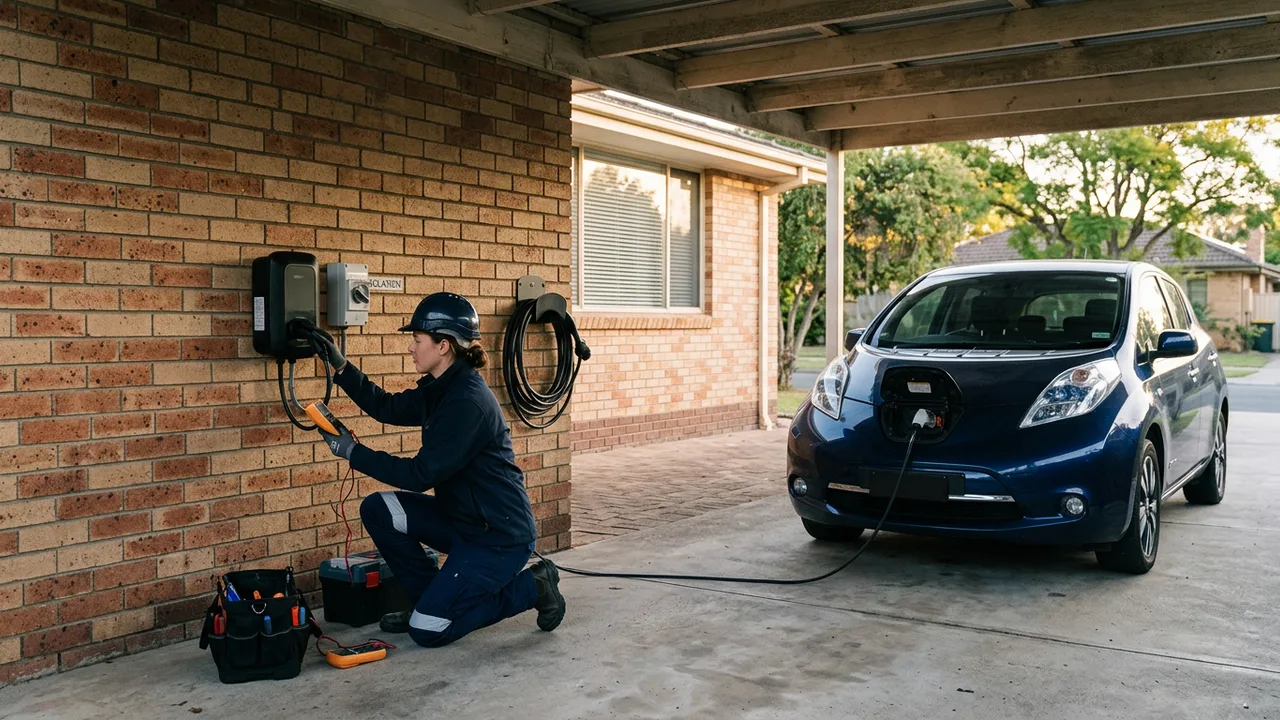
A wall charger replaces the slow cable that came with your car and refills a day's driving overnight. Charging speed depends on your car and your supply, and the electrician confirms it for your setup. A licensed electrician fits it, looks over your switchboard, and finishes with an electronic Certificate of Compliance. Older homes raise a few extra questions, mostly about the board, the cable run and where the car actually sits. Those questions shape the quote more than the charger itself.
Services in Parkside
- Apartment and strata EV charging Car park charging for apartment owners and strata, with load control so residents share the supply.
- Commercial EV charger installation AC and DC charging for workplaces, fleets and retail sites, with load management built into the plan.
- Home EV charger installation A wall charger on its own circuit at your home, so the car is full every morning you head out the door.
- EV charger installation cost and quotes What sets the price of a home charger install, from cable run to switchboard work, in a written quote.
- Switchboard upgrade for EV charging Older fuse boards can struggle with a charger. An upgrade adds room for the load and proper protection.
- Three-phase EV charger installation Homes with three-phase power can run a faster wall charger of up to 22kW where the car can take it.
- Dedicated powerpoint for EV charging A dedicated 15A powerpoint in the garage or carport gives a slower, budget way to charge overnight.
EV charger installation Parkside: what the job involves
A Level 2 charger is a wall unit wired on its own circuit straight from your switchboard. It charges far faster than the portable cable that came with the car, often called a granny charger, which plugs into a normal powerpoint and adds range very slowly.
The electrician starts at the board. They look at what your supply can carry, how much room is left for a new circuit, and whether the existing protection can handle the extra load. Then they plan the cable path to wherever the car parks, fit the charger, test the circuit and set the unit up.
In-scope AC wall chargers installed from 1 July 2024 are set up to the Office of the Technical Regulator guideline, including demand response where it applies. Demand response lets the network ease the charging rate at busy times, and the charger only connects to it with your agreement. Your electrician handles that set-up.
When the job is done, the electrician certifies the install with an electronic Certificate of Compliance. The distance from the board to the car and any board work are what move the price most.
Can a charger go into a heritage character home?
Usually, yes. In most character homes the real work is routing the cable neatly and checking the board. A good electrician keeps the charger and conduit tidy, tucks runs along rooflines, eaves or fence lines, and avoids drilling through anything that matters to the look of the house.
The usual sticking point is distance. In many older houses the switchboard sits on the opposite side from the garage or carport. A longer run costs more in cable and labour, so the quote reflects the actual path.
Surface-mounted conduit is often the neat answer when opening up old walls would be messy.
Will my old switchboard cope with a charger?
Sometimes it will, and sometimes it needs work. A car charging overnight draws power steadily for hours, which is a heavier load than a kettle or oven that runs for minutes. An older board with no spare space, ageing fuses or no safety switches may need an upgrade before a charger goes on.
The electrician checks this first so the charger doesn't trip things once the car plugs in. If the board needs work, you hear about it before the job starts.
Some homes can avoid a full upgrade. A charger that adjusts its draw to what the house is using at the time can sit on a modest supply.
Do I need Level 2 charging, or will a powerpoint do?
A powerpoint is fine for a short commute or a top-up now and then. For daily driving it often falls behind, because the car may not recover a full day's use overnight.
A Level 2 home charger is the usual choice when the car works hard each day. It also keeps the charging load on a dedicated circuit built for the job, rather than a general powerpoint that was never meant to run flat out for hours.
If you have already bought a charger, the electrician can look at whether it suits your supply and the current rules before fitting it.
How does a charger work with solar and a battery?
A charger can work with rooftop solar, and many people want the car to fill from the panels on sunny days. The electrician checks how your inverter, battery and charger share the supply so they don't fight each other. If your solar installer can't fit you in for months, a separate electrician can usually install the charger on its own and leave room for solar later.
Charging at home in Parkside's older cottages and villas
Parkside is in the City of Unley, two kilometres out from the city centre, and its heritage character homes line leafy, quiet streets. Parkside is one of Adelaide's early suburbs, laid out long before anyone planned for a car or a charger. The Adelaide Parklands, Unley Oval and Henry Codd Reserve give the area its open, green setting, while the charger work happens at the house itself.
In a cottage the board can sit in an original front room while the car parks off a rear lane or under a carport added later. A narrow side passage may be the only way through. Each layout changes where the charger goes and how the cable gets there.
If your cottage has no driveway and the car stays on the street, a wall charger needs a private off-street spot to work from. A kerbside space won't do.
Frequently Asked Questions
Does a wall charger cost more to run than the granny charger?
Get it priced
EV charger for your home, strata car space or workplace? Get it quoted and installed.
Share the details and we will help you take the next step with confidence.