
Commercial EV Charger Installation Adelaide
Staff, customer and fleet bays without tripping the main switch. Commercial EV charger installation in Adelaide, planned around your site's power.
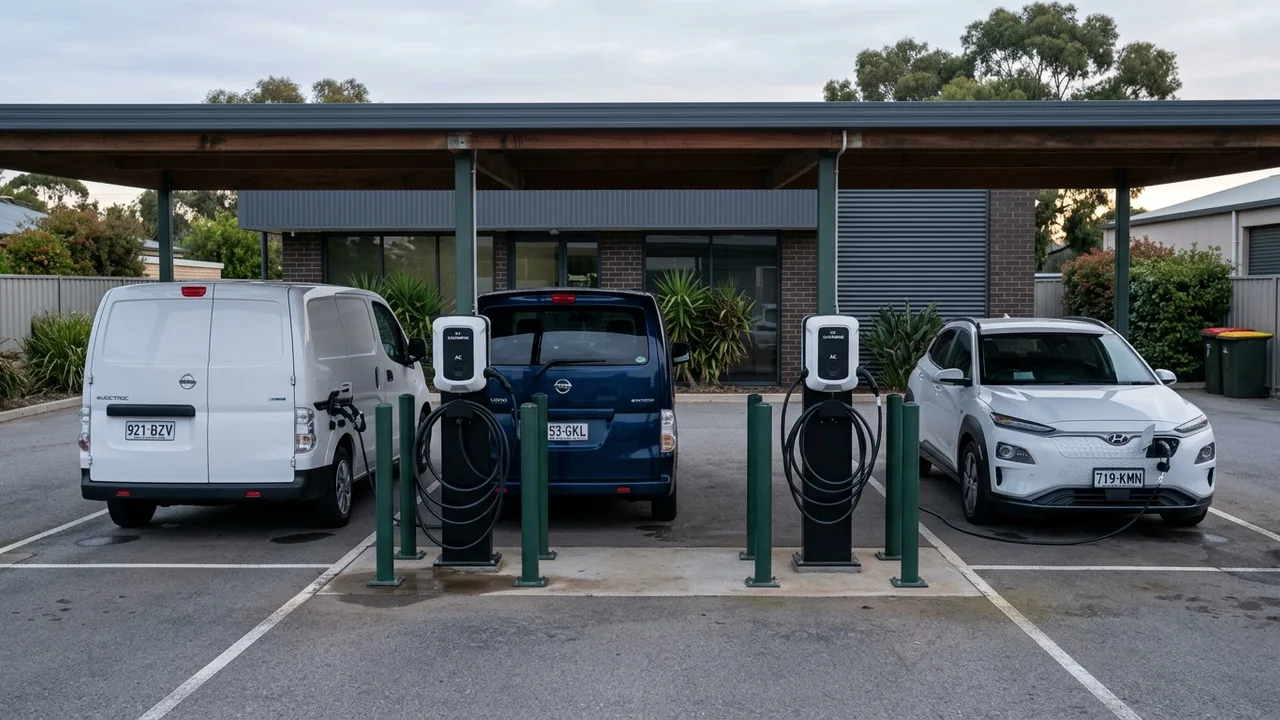
Add several chargers to a shop that is already running air conditioning and the main switch can trip. That is why commercial EV charger installation starts with the power your site already has. A qualified electrician looks at your switchboard, your supply and where the vehicles park, then designs the number and type of chargers that fit. The aim is vehicles that are full when people need them, and a building that keeps running while they charge.
What is included
- Workplace charging for staff Cars that sit all day suit slower AC units, which keep cost and load on the building down.
- Customer charging at retail and hospitality sites A charger near the entrance suits diners or shoppers who stay an hour or two, and it is sized to that stay.
- Fleet and depot charging Each vehicle's daily distance and overnight parking time decide how many chargers a fleet needs and how they share power.
- DC fast charging Sites where vehicles turn around quickly may need faster units, which call for a bigger supply.
- Multi-tenant and body corporate car parks Shared parking raises questions about metering and who pays, which are easier to settle at design stage.
How it works
-
Site assessment
Your switchboard, supply capacity, cable routes and parking layout get inspected, along with how much the building draws on a hot afternoon.
-
Design and written quote
You receive a plan covering charger type, number of bays, load management and any supply upgrade, with a written price before work starts.
-
Network involvement where needed
Larger jobs, such as DC units or a new supply connection, can involve the local electricity network before work starts. The electrician tells you if yours does and what that adds to the timeline.
-
Installation and set up
Cabling, protection and chargers go in. AC chargers covered by the South Australian technical guideline are configured to its demand response rules, and shared power is set to hand over between bays as cars finish.
-
Testing and certification
The job finishes with an electronic Certificate of Compliance and a walk-through of how the chargers operate.
Commercial EV charger installation in Adelaide: matching chargers to how vehicles are used
The right setup depends on how long each vehicle stays and when it needs to leave. Long parking windows, such as staff cars parked for a working day or a courier van parked overnight, can make AC charging practical. The electrician checks whether it can replace the energy each vehicle uses.
A vehicle that returns at lunch and leaves again by two may need DC, depending on how much charge it needs and what charging speed it supports. Customer bays at shops and cafes see shorter stays, so they may need faster AC or a DC unit.
Summer matters in Adelaide. On a 40-degree afternoon, a shop's air conditioning can take most of the supply, which squeezes the capacity left for chargers.
Level 2 AC or DC fast charging: which suits your site
Level 2 AC charging is the same style used for a home EV charger, scaled up to several bays. It draws power gently over a long stay, so it puts little strain on the supply and lets one switchboard feed a whole row of bays.
DC charging fills a vehicle far faster, which helps where cars turn over quickly or a fleet has little downtime. DC may need supply changes, and the quote shows what those cost. Some sites do best with a mix: AC for most bays and one or two DC units where speed pays for itself.
How your site supply shapes the job
Your existing supply sets the ceiling. The busiest draw of the site is measured first, and what is left is what charging can use.
If there is not enough, the options are load management, a switchboard upgrade or a supply upgrade. Each carries a different cost, which is why the assessment comes before the quote.
Long cable runs matter too. A switchboard at the back of a building and bays at the front means trenching or conduit, which adds labour.
Load management and demand response
Load management shares your available power between chargers so they never ask for more than the site can give. A good system can also pass power on to the other chargers as vehicles finish. It lets you install more bays on the supply you have, often avoiding a costly upgrade.
The installer must configure the unit to respond to demand-response signals that can pause charging or reduce its output during network peaks. A licensed electrician sets this up as part of the job.
Charging that works with solar and battery
Chargers can run alongside solar panels and a battery without fighting them. Daytime workplace charging is a natural match, because staff cars are plugged in while the panels are producing.
Charger, inverter and board are planned together so they do not overload the supply or waste solar output.
What drives the cost of business charger installation
Three things move the price most: the type of charger, the distance from the board to the bays, and whether the supply needs upgrading. A row of AC units on a strong supply sits at one end of the range. DC units with a new supply connection sit at the other.
Trenching, signage, bay marking, and metering or payment hardware add to it. A written quote that lists the switchboard work separately shows where the money goes before anything starts.
Approvals and paperwork for commercial charging
Every job finishes with an electronic Certificate of Compliance, as South Australian law requires. If a supply upgrade is on the cards, allow extra lead time before you set a go-live date for the fleet.
If you lease the premises, landlord consent is worth settling early. For body corporate car parks, the committee usually needs to agree on where chargers go and how power is billed.
Running staff, customer or fleet bays? Give your site address and how many vehicles need charging when you request a quote.
Commercial EV charger installation options
- Load management controllers Hardware and settings that cap combined charger demand. A depot with ten vans can then charge them in turn overnight on a supply built for four.
- Payment and metering hardware Card or app payment units and separate metering. A cafe selling power to customers, or a shared car park splitting the bill by tenant, needs them.
- Signage and bay marking Marked bays help keep petrol cars out of charging spaces, which matters most at customer sites where a blocked charger means a lost visit.
Frequently Asked Questions
Are EVs cheaper to run than petrol cars for a business fleet?
Can an interstate electrician do commercial EV charger installation in South Australia?
Are there enough public fast chargers in South Australia for business vehicles?
Get it priced
EV charger for your home, strata car space or workplace? Get it quoted and installed.
Share the details and we will help you take the next step with confidence.